 EN
EN
 AR
AR
 DA
DA
 NL
NL
 FI
FI
 FR
FR
 DE
DE
 EL
EL
 HI
HI
 IT
IT
 JA
JA
 KO
KO
 NO
NO
 PL
PL
 PT
PT
 RO
RO
 RU
RU
 ES
ES
 SV
SV
 TL
TL
 IW
IW
 ID
ID
 VI
VI
 HU
HU
 TH
TH
 TR
TR
 FA
FA
 AF
AF
 MS
MS
 SW
SW
 BN
BN
 HA
HA
 IG
IG
 KM
KM
 LO
LO
 YO
YO
 ZU
ZU
 MY
MY
 AM
AM
 KU
KU
Understanding the Advantages of Battery-Powered Rechargeable Fans
The Rise of Battery-Powered Rechargeable Fans in Personal Cooling
Battery-powered rechargeable fans have revolutionized personal cooling by addressing modern needs for mobility and energy efficiency. These devices now account for over 40% of the portable fan market (Global Cooling Technology Analysis 2024), driven by advancements in lithium-ion batteries and universal charging standards.
Growing Demand for Cordless Fan Operation
Consumers increasingly prioritize cordless operation for outdoor activities, commuting, and small living spaces. A 2024 study shows 68% of urban dwellers prefer portable fans over fixed AC units for targeted cooling. This shift aligns with broader trends in energy-efficient lifestyle choices that emphasize reduced electricity consumption.
How Rechargeable Battery Technology Enables Mobility
Modern lithium-ion batteries provide 8–16 hours of cooling per charge while maintaining lightweight designs under 1.5 lbs. Unlike traditional lead-acid batteries, these power sources offer 500+ charge cycles without significant capacity loss, making them ideal for daily use. Integrated battery management systems prevent overheating, a critical feature for prolonged outdoor applications.
USB-C and Universal Charging: Driving Modern Compatibility
The adoption of USB-C charging has eliminated compatibility issues, allowing users to power fans with laptops, power banks, or solar panels. Industry reports indicate 92% of new rechargeable fans now feature USB-C ports, up from 57% in 2021. This standardization supports cross-device charging ecosystems that enhance convenience for travelers and remote workers.
Battery Life and Charging Performance Explained
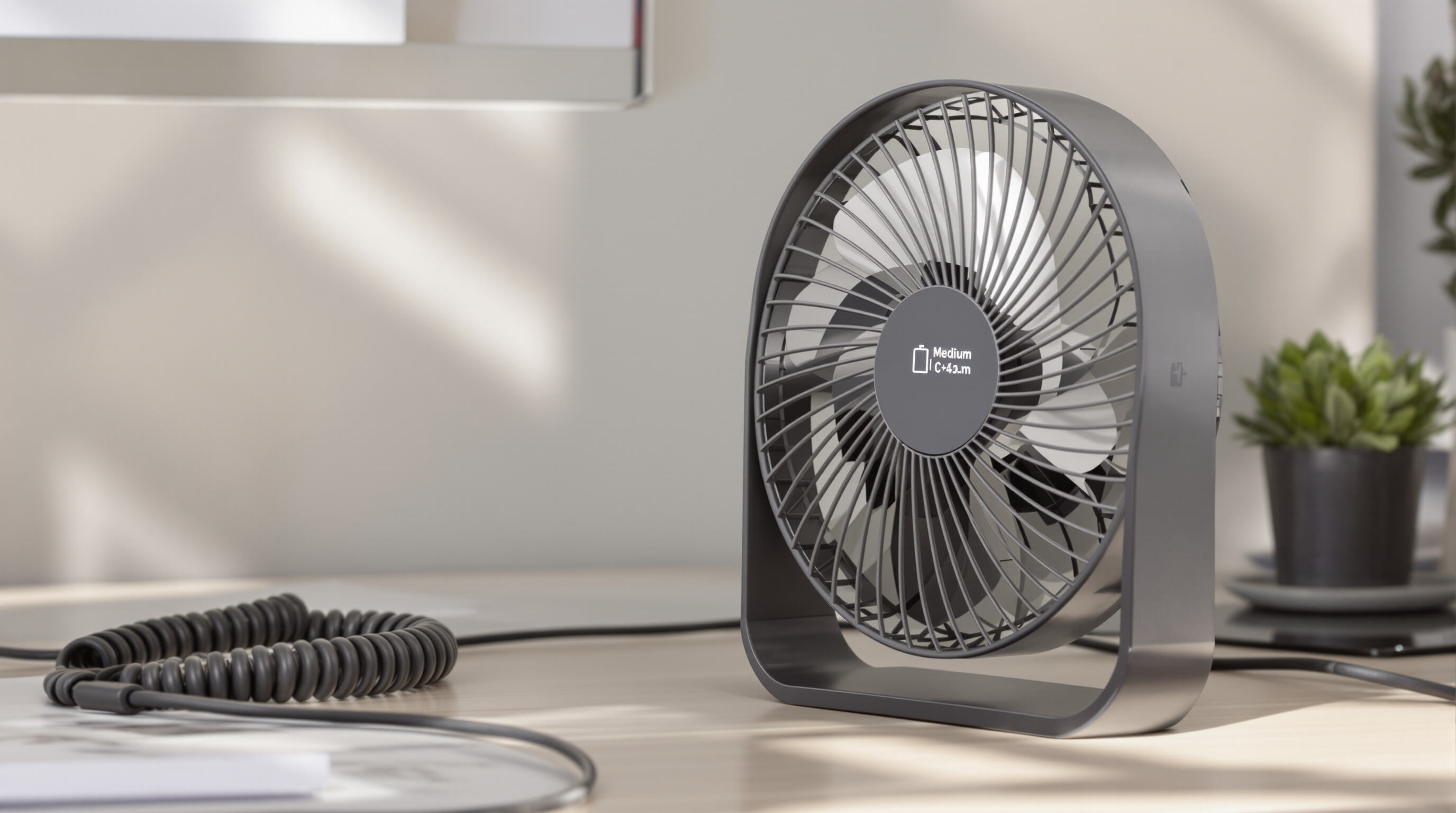
Typical Runtime: 8–16 Hours on Medium Setting
Battery-powered rechargeable fans typically deliver 8–16 hours of continuous operation on medium speed settings depending on battery capacity. This runtime suits daily home or office use without requiring frequent recharging. For perspective, a standard 5000mAh battery—common in mid-range models—supports approximately 14 hours of runtime when driving energy-efficient brushless motors.
Factors That Affect Battery Efficiency and Longevity
Three critical factors influence performance:
- Depth of discharge (DoD): Batteries discharged to ≤20% capacity regularly degrade faster than those maintained at partial discharge cycles, reducing longevity by up to 50%.
- Temperature exposure: Operation in environments >35°C accelerates chemical degradation, slashing cycle life by 30%.
- Charging habits: Complete 0–100% recharges stress cells more than partial top-ups (e.g., 40%–80%), with shallow cycling extending lifespan by 2–3× compared to deep discharges.
| Factor | Impact on Battery Lifespan | Improvement Strategy |
|---|---|---|
| DoD ≤80% | +300% cycles vs. full discharge | Maintain 20%–80% charge level |
| Temp ≤25°C | +40% cycles vs. high-heat use | Use in shaded environments |
| Partial cycling | 2000–4000 cycles possible | Avoid frequent 0–100% charges |
Fast Charging vs. Battery Health: Key Trade-offs
Rapid-charging technologies like USB-C PD replenish 50% battery power in under 60 minutes but generate excess heat that degrades cells 15% faster. For extended battery health, slower overnight charging (<1A current) preserves electrode integrity—compromising immediate convenience for up to 2× longer service life.
Portability and On-the-Go Use Cases
Battery-powered rechargeable fans excel in mobility-focused scenarios where traditional cooling methods fall short. Their cordless operation and lightweight designs meet modern demands for adaptable temperature control across diverse environments.
Design Features That Enhance Mobility
Today's designs focus on being easy to carry around thanks to foldable blades, comfortable handles, and overall weight staying below 2 pounds these days. These features match what market experts are predicting about portable power solutions growing at around 7.9% each year according to Future Market Insights from 2025. Most units come equipped with built in clips and soft grip areas so they can attach securely to things like backpack straps, baby strollers, even those outdoor patio seats nobody ever uses. The motor noise stays really low too, typically under 25 decibels which means no one gets annoyed when someone is trying to charge their phone during lunch breaks or family outings.
Commuting and Urban Transit: Staying Cool in Motion
City folks heading into work have started grabbing those little fans to deal with packed subway cars and sweltering bus shelters. According to recent data from the Urban Mobility Index (2023), something like 63 percent of people who ride public transport in big cities now carry some kind of personal cooler with them when temperatures climb during summer months. We're seeing a trend where smaller gadgets are becoming must-haves for daily routines. Commuters want things that won't take up much space in their backpacks but still manage to push enough air around to make the difference between sweating through clothes and staying reasonably comfortable while stuck waiting for trains or buses.
Travel and Airplane Use: Compact Cooling Solutions
TSA-compliant models under 12" wide with 10,000 mAh batteries provide 14+ hours of cooling—enough for international flights. Dual USB-C ports allow simultaneous phone charging, while airline-approved foldable designs slip under airplane seats. Frequent travelers particularly value the ability to create personal airflow in hotels lacking AC systems or crowded airport lounges.
Outdoor and Emergency Applications
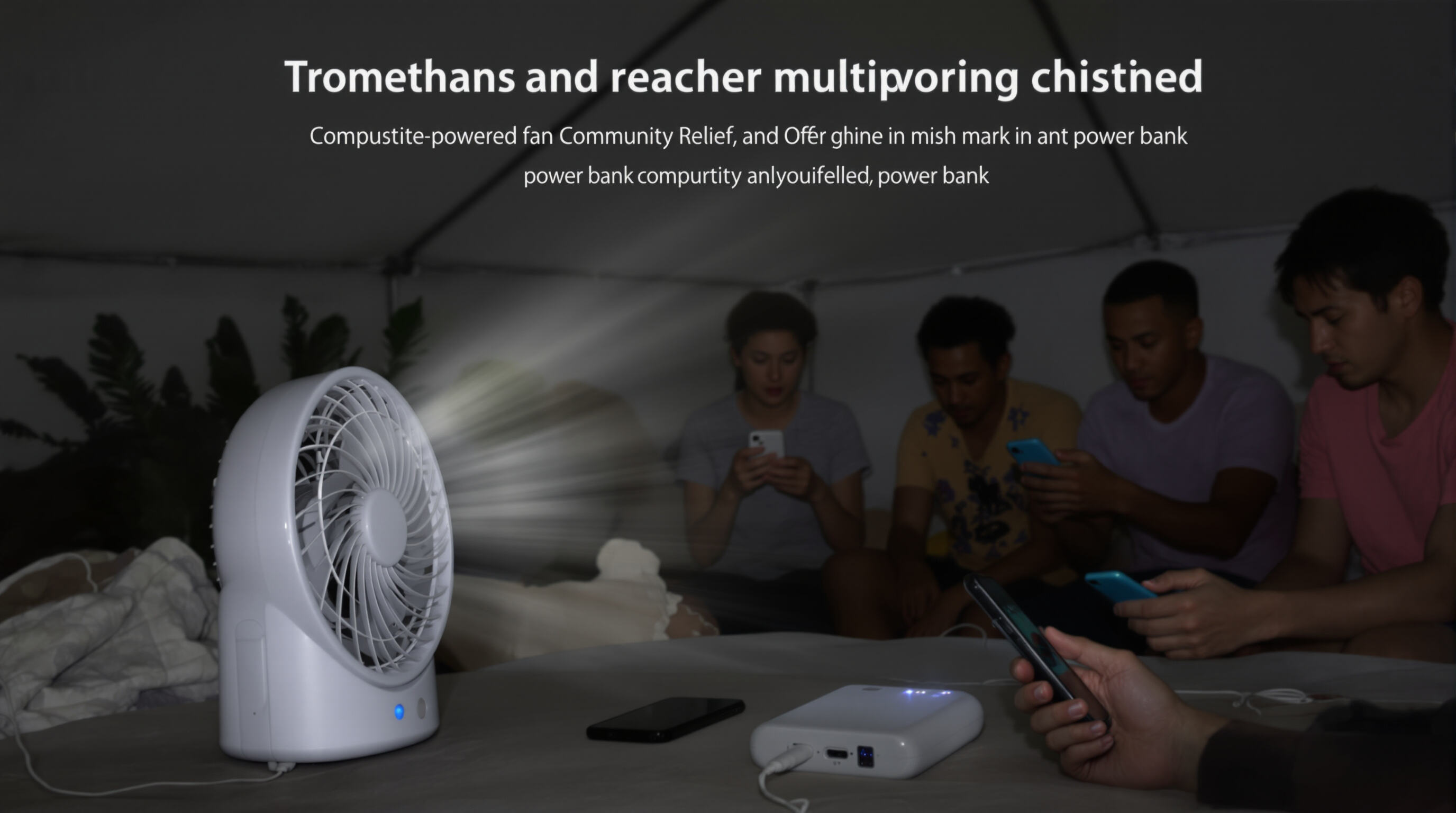
Camping, Hiking, and Beach Use in Off-Grid Environments
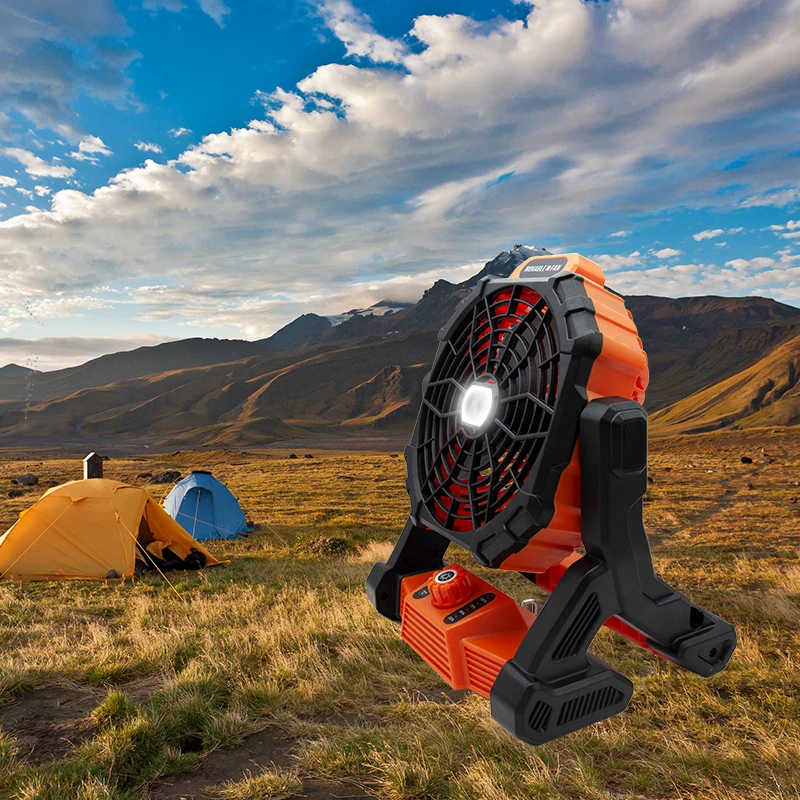
Rechargeable battery fans are now must-have gear for anyone who loves spending time outdoors. These little devices can run for around 8 to 12 hours straight, which makes all the difference when stuck on a long hike or relaxing at the beach where there's no electricity nearby. Most models weigh less than two pounds and come folded up small enough to stash in a backpack pocket. Plus, they're built with materials that stand up to rain and sand without breaking down. According to recent data from the Outdoor Recreation Association's annual report last year, nearly seven out of ten campers say they'd rather bring along something compact like this than deal with those big clunky coolers everyone used to drag around before. Makes sense really since nobody wants to sweat through their sleeping bag setup or melt into the ground during those brutal afternoon sun hours.
Solar Charging Integration for Sustainable Outdoor Use
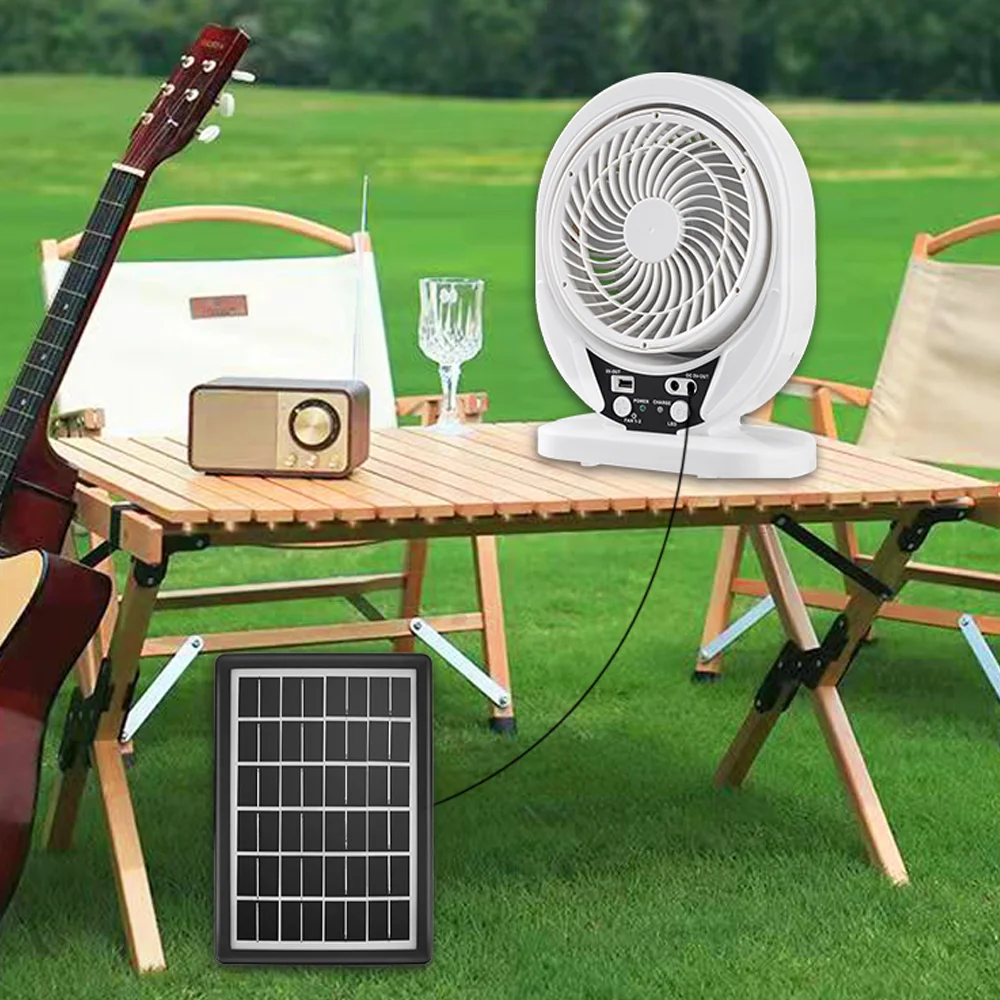
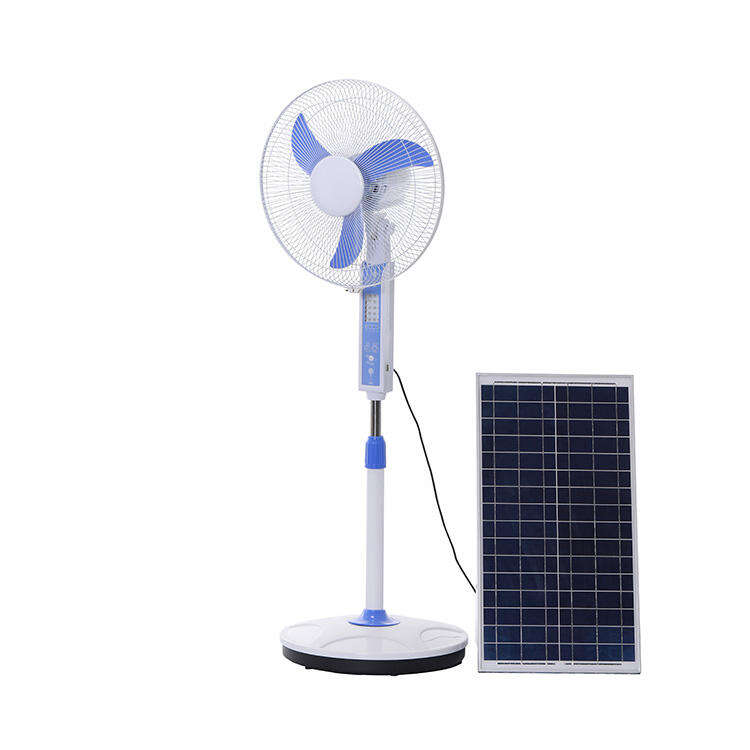
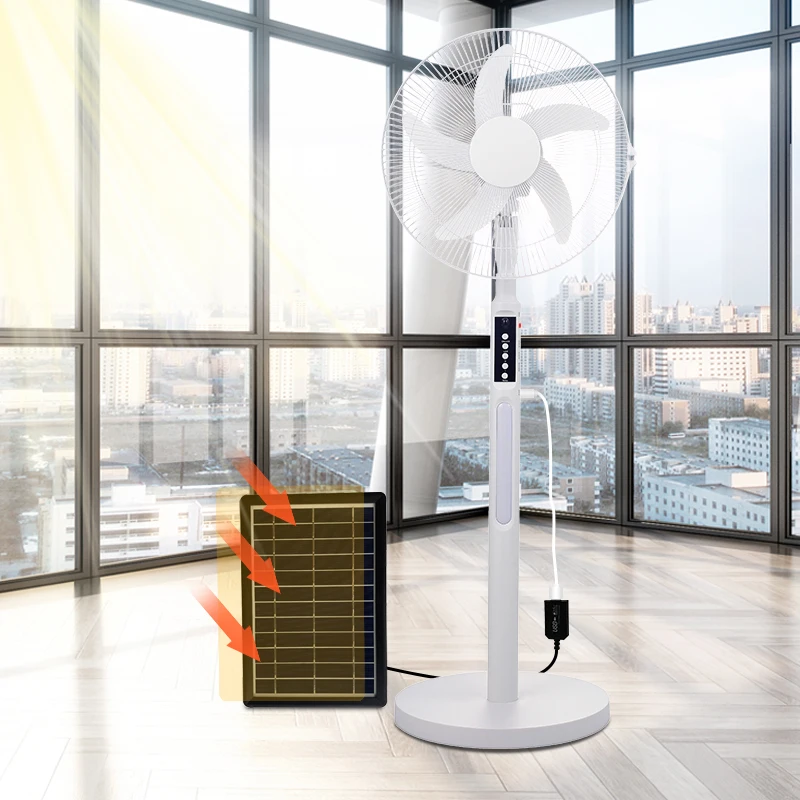
Many top models on the market today come with solar charging capabilities, filling up batteries completely within around 4 to 6 hours when placed in good sunlight conditions. The benefit here is twofold really solar powered fans cut down our dependence on regular electricity from the grid and they're better for the environment too. Studies show that these solar friendly devices create about 40 percent less pollution throughout their entire life cycle than traditional ones that need disposable batteries replaced constantly. Most companies also include USB-C connections so users can charge their devices using either solar panels directly or through portable power banks at the same time if needed.
Role in Disaster Relief and Emergency Cooling Scenarios
During Hurricane Ian (2022), responders deployed over 15,000 rechargeable fans to cooling centers, leveraging their cordless operation amid widespread power outages. Modern designs meet FEMA’s emergency equipment standards, offering:
- 360° airflow for group cooling in temporary shelters
- Silent operation (<30 dB) for medical tent use
- Multi-device charging via built-in power banks for phones and tablets
This dual functionality makes them critical in heatwaves, where the CDC reports cooling access reduces heatstroke risks by 72%.
Battery Types and Sustainability Considerations
Lithium-ion vs. Li-Po: Comparing Rechargeable Technologies
Most portable cooling devices rely on lithium-ion (Li-ion) batteries because they pack way more energy into smaller spaces than old school nickel-cadmium options (about 3 to 4 times more actually). Plus, they charge up pretty fast which is a big plus for anyone needing quick power boosts. On the flip side though, there are lithium-polymer (Li-Po) batteries too. These have this neat advantage where manufacturers can mold them into all sorts of shapes, which works great when designing super thin fans that fit into tight spaces. And safety wise, Li-Po tends to be less prone to those dangerous overheating incidents we sometimes hear about with regular lithium batteries. Looking at recent studies, most Li-ion packs last between 500 and 800 charge cycles before needing replacement. That's actually quite impressive compared to Li-Po versions which typically only make it through around 300 to 500 cycles under similar usage patterns. So while Li-Po offers some design benefits, longevity remains a key factor many manufacturers still consider carefully.
Integrated vs. Replaceable Batteries: Pros and Cons
Built-in batteries save room inside gadgets and cut down on places where things might break, but when these power sources start to wear out, folks usually have to toss the whole device. On the flip side, batteries that can be swapped out tend to make products last longer and are easier to recycle properly. The downside? They take up more space overall and need extra protection against damage. Looking at some recent research from 2023, fans equipped with removable batteries actually stayed working about 18 percent longer compared to those with fixed batteries inside. That kind of difference matters a lot for consumers wanting their electronics to stick around for as long as possible without breaking the bank on replacements.
Environmental Impact and Long-Term Cost of Ownership
While lithium-based batteries reduce fossil fuel dependency, their cobalt extraction and limited recycling infrastructure pose ecological challenges. A 2024 analysis estimates improper disposal contributes to 22% of toxic e-waste globally. Sustainable alternatives like solar-compatible LiFePO4 batteries reduce landfill reliance, offering 2,000+ charge cycles—a 40% improvement over standard Li-ion.
FAQ
What are the benefits of using a battery-powered rechargeable fan?
Battery-powered rechargeable fans offer mobility, energy efficiency, and reduced electricity consumption. They are ideal for outdoor activities, commuting, and use in small living spaces.
How long do the batteries last in rechargeable fans?
Lithium-ion batteries in rechargeable fans typically last between 8-16 hours on a medium setting, with a lifespan of 500+ charge cycles.
Can I charge a rechargeable fan with a solar panel?
Yes, many modern rechargeable fans come with solar charging capabilities and USB-C ports, making them compatible with solar panels and power banks.
What factors affect the battery lifespan of a rechargeable fan?
Battery lifespan is influenced by depth of discharge, temperature exposure, and charging habits such as frequent full recharges versus partial top-ups.